
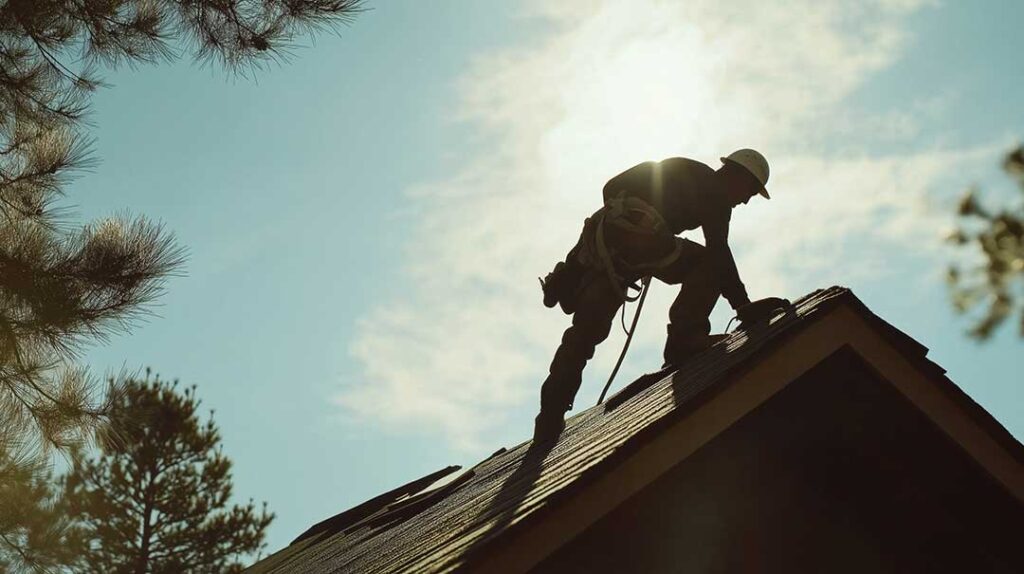
Shade trees can help a home stay cooler, but branches and dense foliage may also shorten the useful life of a roof. In Hoosick Falls, NY, where roofs experience snow, ice, rain, humidity, and seasonal temperature swings, the effect depends on tree placement, roof design, ventilation, and maintenance.
A tree near a house is not automatically a roofing problem. Healthy, well-spaced trees may provide useful shade and reduce summer heat. Trouble usually begins when limbs touch the roof, leaves remain trapped on roofing materials, or shaded areas stay damp long after rain.
Do shade trees extend or reduce roof longevity?
Shade trees can do either. Their cooling effect may reduce heat-related stress on roofing materials, especially during hot summer weather. However, excessive shade and debris can create conditions that encourage moisture retention, organic growth, clogged drainage, and surface wear.
The result depends on the balance between benefits and risks:
- Potential benefit: Less direct sunlight can reduce heat buildup in the attic and roof surface.
- Potential risk: Persistent shade can slow drying after rain, snowmelt, or overnight condensation.
- Potential risk: Leaves, needles, and small branches can collect in valleys, gutters, and roof-edge areas.
- Potential risk: Overhanging limbs may scrape shingles or break during wind, ice, or heavy snow.
- Potential risk: Tree roots do not usually damage the roof directly, but unstable or declining trees can create serious impact hazards.
A roof under a tree canopy may therefore last longer in one respect and deteriorate faster in another. Regular observation is more useful than assuming all shade is helpful or harmful.
Why is roof shade especially relevant in Hoosick Falls?
The local climate includes cold winters, freeze-thaw cycles, snow accumulation, spring rain, and humid summer conditions. These patterns make drying and drainage particularly important.
Snow may remain longer on a shaded roof than on a roof exposed to full sun. That is not necessarily a defect, but prolonged snow cover adds weight and keeps roofing materials cold and damp. During thawing weather, snow can melt unevenly, creating wet areas that later refreeze.
Trees also shed at different times of year. Spring buds, summer debris, and autumn leaves can collect on the roof or in drainage systems. If material remains in place, it can hold moisture against shingles and block water from flowing toward the gutters.
Older homes and houses with additions may have roof sections with different slopes, valleys, dormers, or porch connections. These areas can collect debris more readily than a simple, steep roof. A shaded, low-slope section deserves closer attention because water and organic material may remain there longer.
Can tree shade cause algae, moss, or lichen?
Shade does not create algae, moss, or lichen by itself, but it can make the roof environment more favorable for them. Moisture is the main requirement. A roof that receives little sunlight may stay damp after rain, especially when nearby branches limit airflow.
Algae often appears as dark streaks or discoloration. It may affect appearance without immediately causing major damage, although heavy buildup can retain moisture. Moss is more concerning because it can grow between or beneath shingle edges, lifting materials and allowing water to move where it should not.
Lichen attaches firmly to roofing surfaces and may be difficult to remove without damaging granules or shingle coatings. Aggressive scrubbing or pressure washing can shorten roof life even when the goal is cleaning.
Not every dark mark indicates a roof leak, and not every green patch requires immediate replacement. The more useful questions are whether the growth is spreading, whether shingles are lifting, and whether the affected area stays wet for long periods.
How do overhanging branches damage roofing?
Branches can cause both gradual and sudden damage. A limb that repeatedly rubs against shingles may remove protective granules and wear through the surface. Smaller twigs can scrape during windy weather, while falling branches can puncture shingles, damage flashing, or break gutters.
Tree movement can also affect roof ventilation components. Branches may strike ridge vents, plumbing vent pipes, or metal flashing. Even minor damage can allow water into the roof assembly if it is not noticed.
The most hazardous trees are not always the largest. A dead limb positioned above a roof can be more dangerous than a healthy branch farther away. Warning signs include:
- Dead or bare branches near the roof
- Cracked limbs or cavities in the trunk
- Branches resting on the roof or gutter
- Visible leaning toward the house
- Loose bark or signs of decay
- Limbs that move significantly during ordinary wind
Tree work near a roof can be hazardous because ladders, pruning tools, and falling limbs create multiple risks. Where cutting requires climbing, working near electrical lines, or handling large limbs, safety considerations may justify assistance from a qualified tree-care provider.
What maintenance helps protect a shaded roof?
The most effective approach is to manage moisture, debris, and physical contact. A seasonal check can reveal problems before they become concealed leaks.
After major storms and during autumn leaf drop, look for:
- Leaves or needles concentrated in valleys
- Shingles that are curled, cracked, loose, or missing
- Granules collecting in gutters or at downspout outlets
- Dark damp areas that do not dry normally
- Moss or lichen growing along shaded roof edges
- Gutters overflowing during moderate rainfall
- Branches touching the roof, siding, or gutter system
Gutters and downspouts deserve particular attention. A shaded roof can shed water normally, but blocked gutters allow water to back up near roof edges. In cold weather, trapped water may freeze and contribute to ice buildup. Gutter guards may reduce some debris, but they do not eliminate the need for inspection because small seeds, roof granules, and decomposing leaves can still accumulate.
Branches should generally remain clear of the roof surface. The appropriate distance varies by tree size, species, roof height, and local conditions, so a simple fixed measurement does not fit every property. Clearance should also account for how much branches sway during wind and how snow or ice may weigh them down.
Does removing a tree always improve roof performance?
No. Removing a tree may increase sunlight and airflow, but it can also expose the roof to stronger wind, rapid temperature changes, and more direct summer heat. A tree may also protect a house from some prevailing weather without touching the roof.
Tree removal can create a second problem if the remaining root system affects soil stability or if the work damages the roof, siding, lawn, or underground utilities. Decisions should consider the tree’s health, position, growth pattern, and relationship to the building rather than focusing only on shade.
In many cases, selective pruning is more appropriate than removal. The goal is to maintain reasonable clearance, preserve airflow, and reduce hazardous limbs while keeping useful landscape benefits.
When should a shaded roof be inspected more closely?
A closer inspection is sensible after a major storm, after a large limb falls, or when interior signs suggest water entry. Look for ceiling stains, damp attic insulation, musty odors, daylight visible through the roof assembly, or water marks near chimneys, skylights, and roof valleys.
Extra attention is also warranted when a roof section remains wet long after surrounding areas have dried, when moss is lifting shingles, or when gutters repeatedly overflow despite cleaning.
Shade alone is not a reason to replace a roof. A sound roof can perform well beneath mature trees if branches are controlled, drainage remains open, and moisture-related problems are addressed early. The practical objective is not to eliminate every tree near a home, but to prevent foliage and limbs from turning normal seasonal conditions into prolonged roof exposure.
